
When Montana State lost to Kansas State in the Round of 64 in the NCAA Tournament, not many heads turned.
It was a valiant effort by a 14 seed. But ultimately, the loss just about everyone outside — and most inside — Bozeman, Mont. expected.
But it’s a loss nine other Big Sky schools would take in a heartbeat.
Qualifying for the NCAA Tournament is the yearly goal of all 10 Big Sky programs — as well as that of hundreds of other small schools across the country. And the Bobcats have earned the Big Sky’s automatic qualifying bid the past two seasons by winning the conference tournament.
Montana State is doing something right. But what exactly? And how can UNC steal it?
WHAT THE BEARS HAVE BEEN UP TO
The Bears lone (now vacated) Big Sky title came in 2011.
That year, they made the NCAA Tournament as a 15 seed, losing in the first round to a San Diego State led by Kawaii Leonard.
UNC has had some competitive seasons since, especially recently.
The Bears lost in the Big Sky Tournament final to Montana State just last year. And in 2018, they won the CIT in front of a sellout crowd at Butler-Hancock Arena.
But an invite to March Madness has evaded them.
WHAT MONTANA IS GOOD AT
The Bobcats didn’t just stumble into back-to-back NCAA Tournaments. And they didn’t win 52 games over the past two seasons by accident.
So what do they do well? Simply put: defense.
The Bobcats have made their bones on the defensive end of the court since head coach Danny Sprinkle took over four years ago.
Excluding a COVID-ravaged 2020-2021 season, the Bobcats haven’t finished worse than fourth in the Big Sky in points allowed — improving every year along the way.
They led the conference this season, allowing just 66.9 points per game. That led to an average point differential of seven — again tops in the Big Sky.
HOW THEY DO IT
Having the past two Conference Defensive Players of the Year sure doesn’t hurt.
Forward Jubrile Belo took home the honor last year, while Cal State-Northridge transfer Darius Brown II won the award this season.
But it goes a little deeper than that.
The entire Montana state squad did a great job, holding opponents to just 43 percent from the field and a Big Sky-best 32 percent from 3-point range.
That defense hid an at-times worse-than-average offense. The Bobcats were actually outshot by opponents over the season, making up for the difference forcing bad shots and limiting turnovers.
THE OTHER SIDE OF THE COIN
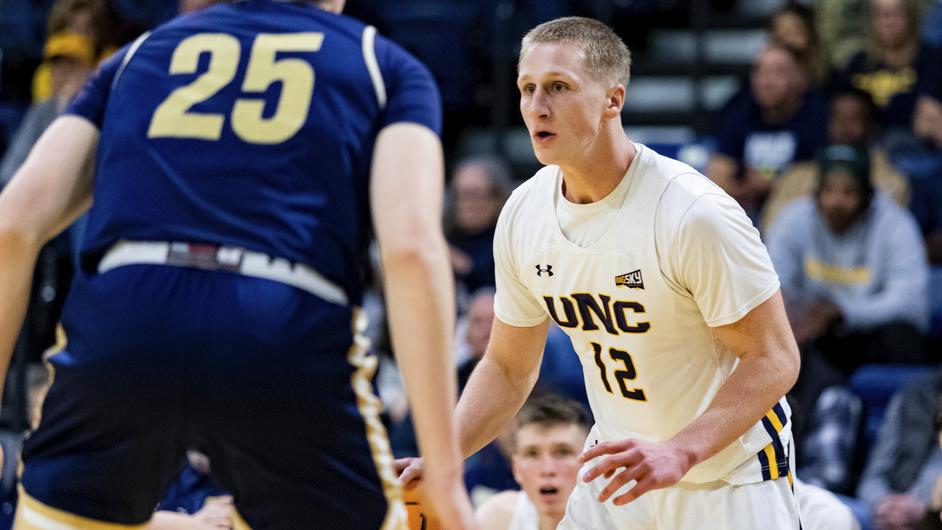
UNC, on the other hand, is a completely different story. While MSU prefers to grit and grind, UNC opts to run and gun.
The Bears let it fly early and often — especially from deep — taking and making the third most 3’s in the conference.
But it comes at a cost to their defense.
UNC has the worst defense in the league, allowing two points per game more than second-place Portland State. They also allowed the highest opponent field goal percentage in the Big Sky.
HOW TO FIX IT
So, what can the Bears do to improve on the defensive end of the floor?
Honestly, I don’t know. And if I did I wouldn’t be writing for this website.
Defense — especially at the mid-major college level — is a combination of effort and scheme. Of course, some players have an athletic advantage, but everyone is athletic at this level.
Coach Steve Smiley has shown the ability to put a good defensive team on the floor, finishing fourth in the Big Sky in defense his first year at the helm.
He was also on now-Wyoming head coach Jeff Linder’s staff when Jonah Radebaugh won Big Sky DPOY three times in his career.
And whether or not he will be able to turn it around, UNC believes he is the guy — with good reason. He received a five-year extension before this season after finishing over .500 in each of his first two seasons.
 Bear Claw Media
Leave a comment